
Weeks 1–2
Pain
Calm the pain down.
Hands-on techniques calm the irritated joint, bursa, or tendon and take the edge off inflammation, starting your very first visit.
What We Treat
Do daily activities like walking the dog or grocery shopping leave your knees achy? Do you struggle to get comfortable at night due to hip stiffness? We pinpoint what’s driving your hip and knee pain, then build a plan to fix it.
Sound Familiar?
Two or more? Keep reading.
Why It Happens
Your hip and knee take repetitive stress from every direction, every day: walking, bending, rotating, even sitting. Over the years that adds up, and it usually comes down to three culprits. Abnormal mechanics: a short, tight hip flexor or weak glutes shift weight across the pelvis and into the knees, stressing the structures that stabilize them (even a 1 cm leg length difference changes joint loads). Repetitive impact: running and jumping send multiples of your body weight through cartilage and ligaments with every stride. And arthritic changes that build after years of training or heavy lifting.
Because the hip and knee are linked by shared muscles and nerves, pain in one often comes from the other. It takes a thorough evaluation to isolate exactly what’s driving yours. Find the real cause, and the fix gets obvious.
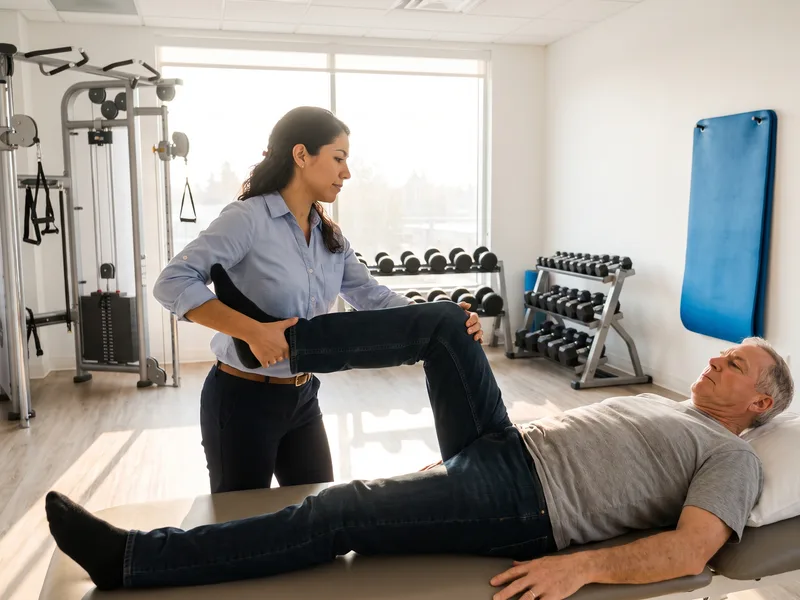
The Honest Truth
You’re the one who keeps everyone else moving, at work, at home, on the trail. That’s exactly why you’ve been pushing through hip and knee pain instead of dealing with it. Nobody regrets starting early. Every week, someone in our clinic wishes they had.
How We Fix It
Every plan has an endpoint. Here’s what the four phases look like for a hip or knee.
Weeks 1–2
Pain
Hands-on techniques calm the irritated joint, bursa, or tendon and take the edge off inflammation, starting your very first visit.
Weeks 2–6
Prime
Targeted mobility work loosens tight hip flexors and restores motion in the hip and knee that have been guarding the injury.
Weeks 6–10
Perform
Progressive glute and hip strengthening corrects the muscle imbalance around the pelvis that overloads the knee.
Weeks 10+
Prevent
Walking and running mechanics get tested under real load before you’re cleared to go all-in: that’s the endpoint, not just another appointment.
I recommend Dr. Dan Benson as wholeheartedly as possible for athletes looking to fix any type of injury. They've helped me through serious hip injury and surgery recovery, along with many other injuries and pains I've had over the last 5 years.
Alexander N. · Google review
Before: a hip bursitis flare-up that made every step an ache
After: back on a running ramp-up plan
Questions, Answered
The hip and knee share muscular connections and nerve pathways. Chronic hip stiffness, or changes after surgery, can lead you to compensate and move asymmetrically, which puts extra load on the knee and wears it down over time. That’s why we evaluate the whole chain, not just the joint that hurts.
The sciatic nerve runs from the lower spine and pelvis down the back of the leg. When it’s compressed by muscle spasm or spinal joint dysfunction, you can feel pain along that path, into the thigh and toward the knee. Precise manual therapy helps relieve that irritation.
Any fall that leads to swelling, bruising, or a real loss of movement should be evaluated to rule out a fracture. Pain that lingers for months, even with rest, also deserves a proper assessment before it turns into a longer-term problem.
Start with a thorough evaluation to find the alignment issue or inflammatory cause behind it. From there, your plan combines gentle mobilization to restore joint motion, targeted strengthening to rebuild stability, and guidance on warm-ups, activity pacing, and recovery so the results last.
Book Your Visit
Request a time and a real person calls you back, usually within two business hours. No phone tree. No ‘someone will reach out.’ Just a plan.
5.0 · 250+ Google reviews
Typical response: under 2 business hours
Step 1 of 5
That’s the hard part done. We’ll call during business hours to lock in your time. Most people are on the schedule same week.
Visit Us